ScalewaySkip to loginSkip to main contentSkip to footer section

Environmental Footprint Calculator

Track your actual environmental footprint and make smarter, low-impact choices.

Monitor real usage — not estimates

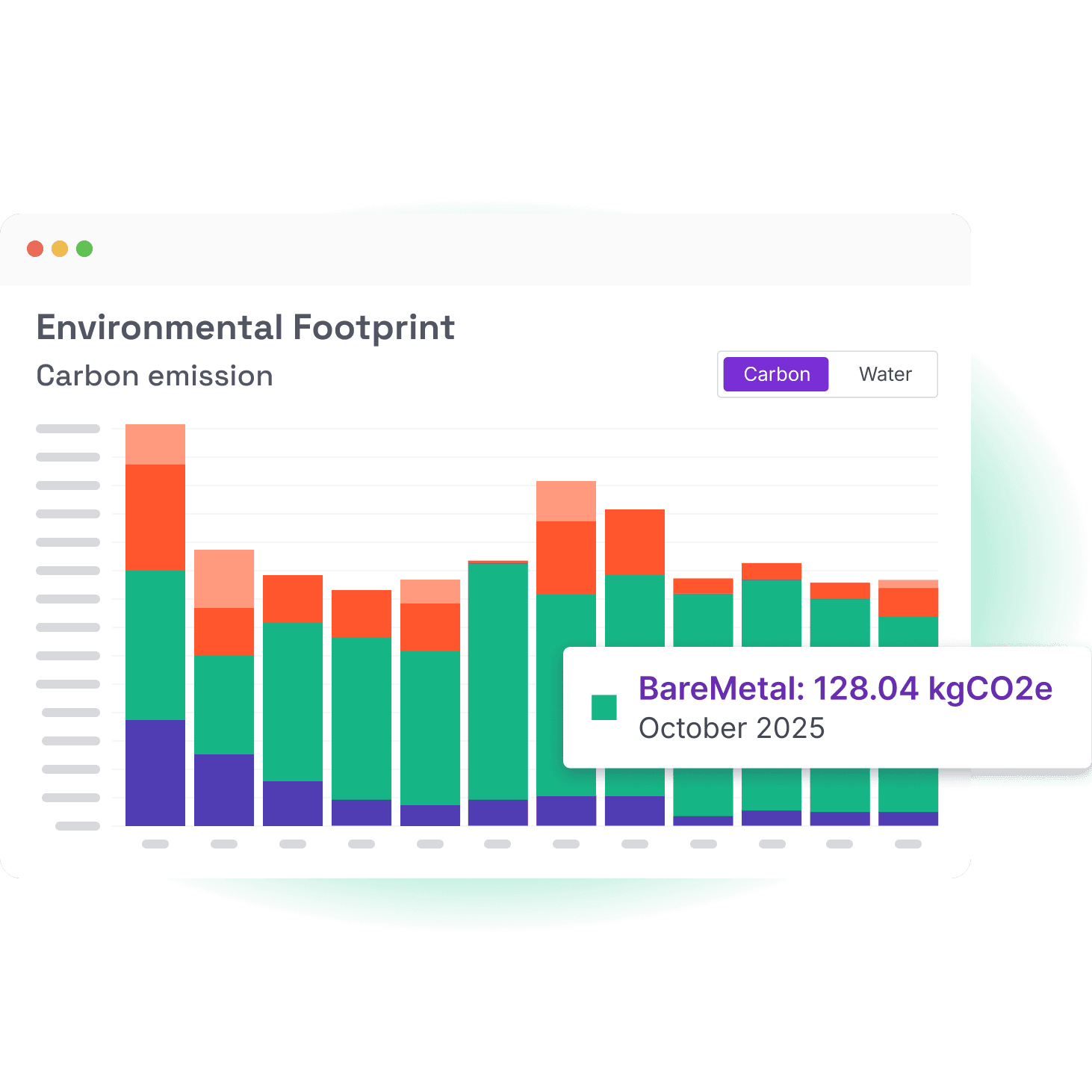
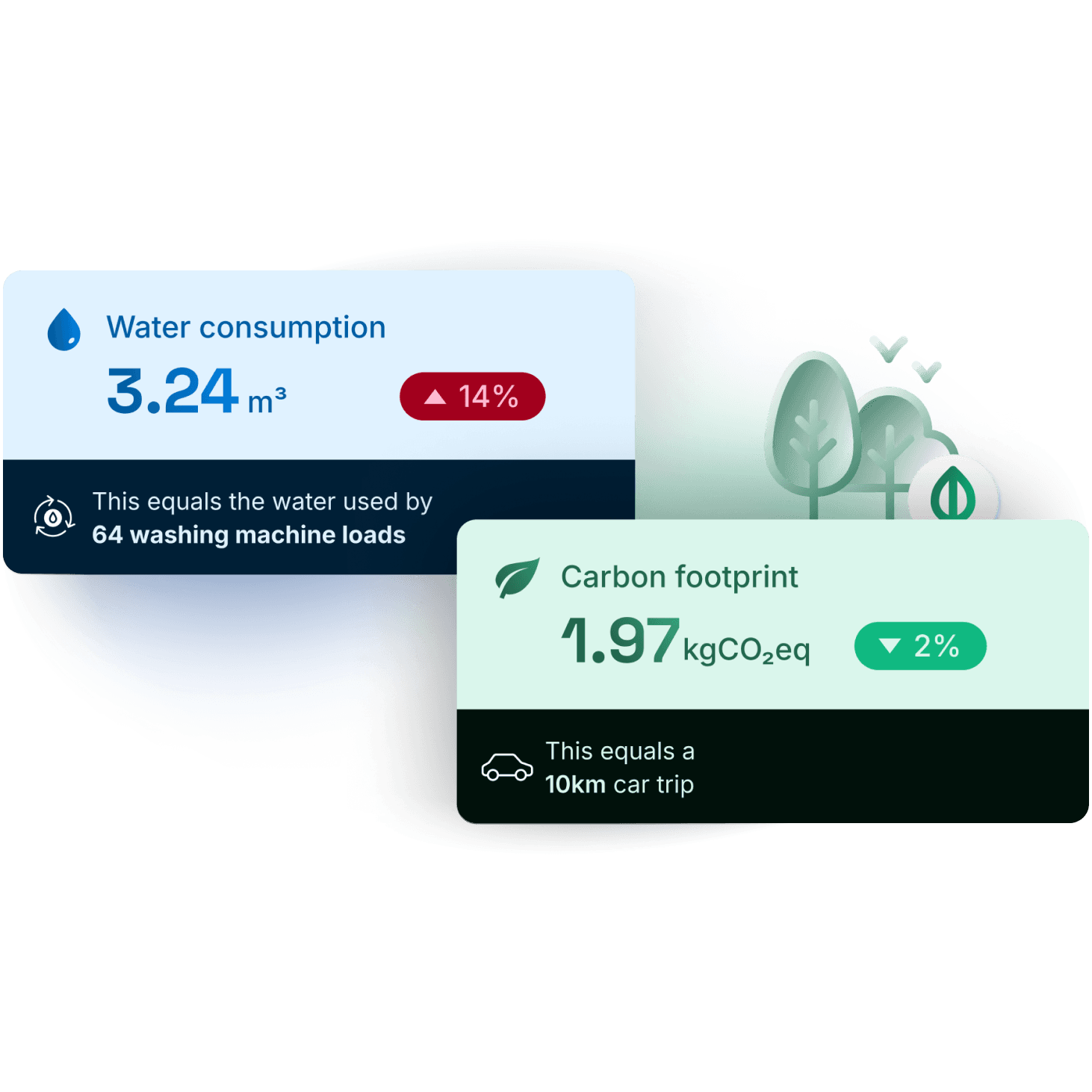
Get daily, granular data on your cloud footprint—broken down by product, region, and project. Track real carbon (kgCO₂e) and water (m³) usage instead of generic averages. Visualize trends via interactive dashboards, download compliance-ready reports, or integrate via API.

Design lower-impact infrastructure

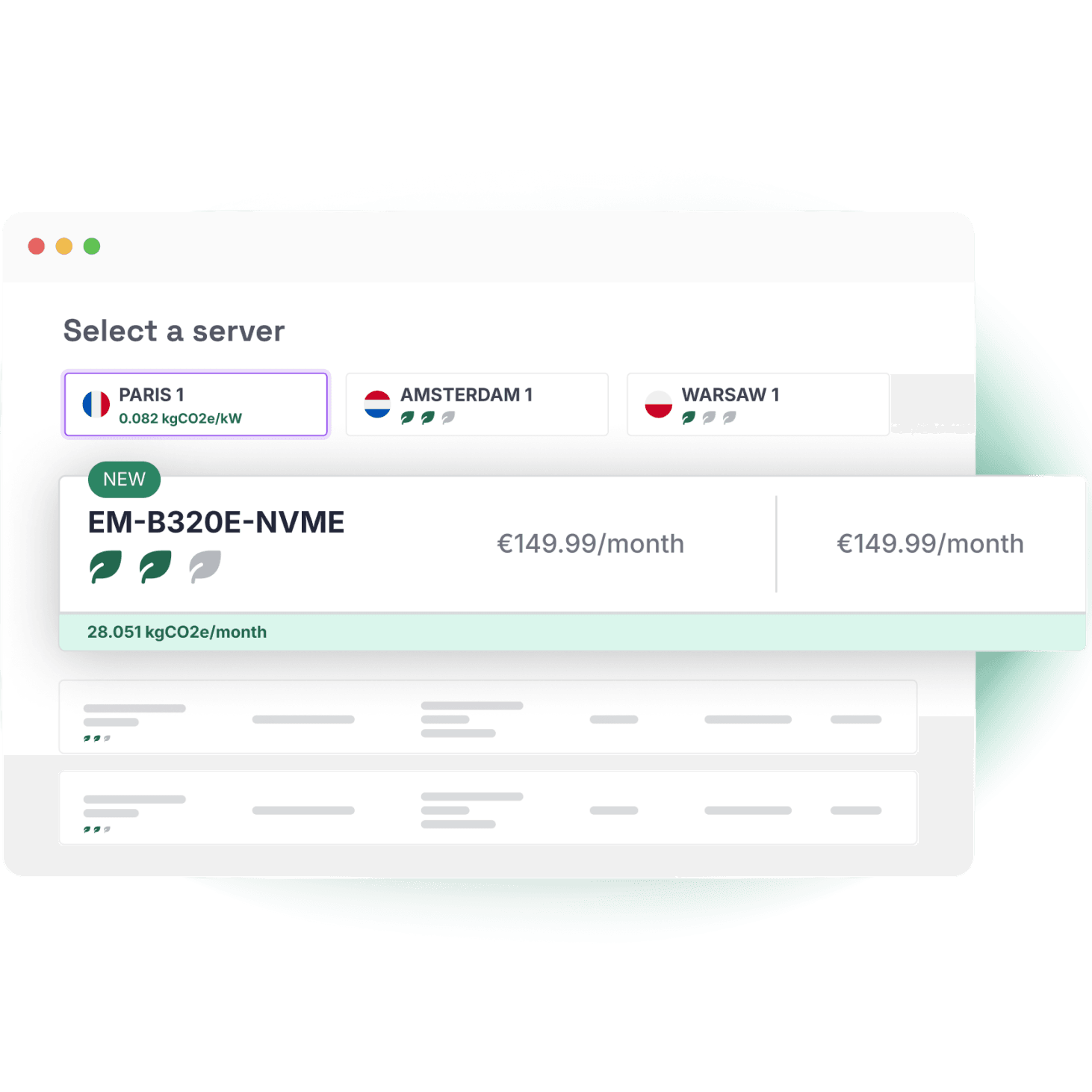
Use impact estimates available directly in the console to guide your architectural choices. Compare cloud products within a family using key indicators (like kgCO₂e/hr) and an easy-to-read 0-to-3 leaf scale, helping you align performance with sustainability goals.

Communicate with clarity and credibility

Share your impact confidently with stakeholders using our transparent, ADEME-backed methodology. From interactive dashboards to CSR-ready reports and seamless API integration, we provide the tools to make sustainability a core part of your business strategy.

The sustainability challenge

Digital footprint keeps growing

Driven by the AI boom, the International Energy Agency projects that data center power consumption will surge to around 1,000 TWh by 2030, matching the annual electricity usage of a country like Japan.

Monitoring and comparability are limited

Calculating a digital product's footprint is complex, involving multiple lifecycle stages. The absence of a universal calculation method makes provider comparisons challenging.

Regulations are around the corner

The EU’s Corporate Sustainability Reporting European Directive (CSRD) mandates annual environmental impact reporting since 2025 for large companies and by 2027 for smaller ones.

Discover your real environmental footprint

  • Dynamic monitoring to drive your GreenOps strategy

    Your infrastructure evolves, and your environmental tracking should too. Use our dynamic dashboards to follow your carbon and water trends effortlessly. Quickly identify usage spikes, validate the success of your latest architectural optimizations, and share these visual insights with your team. Turn raw data into actionable sustainability metrics.

  • Carbon and water metrics

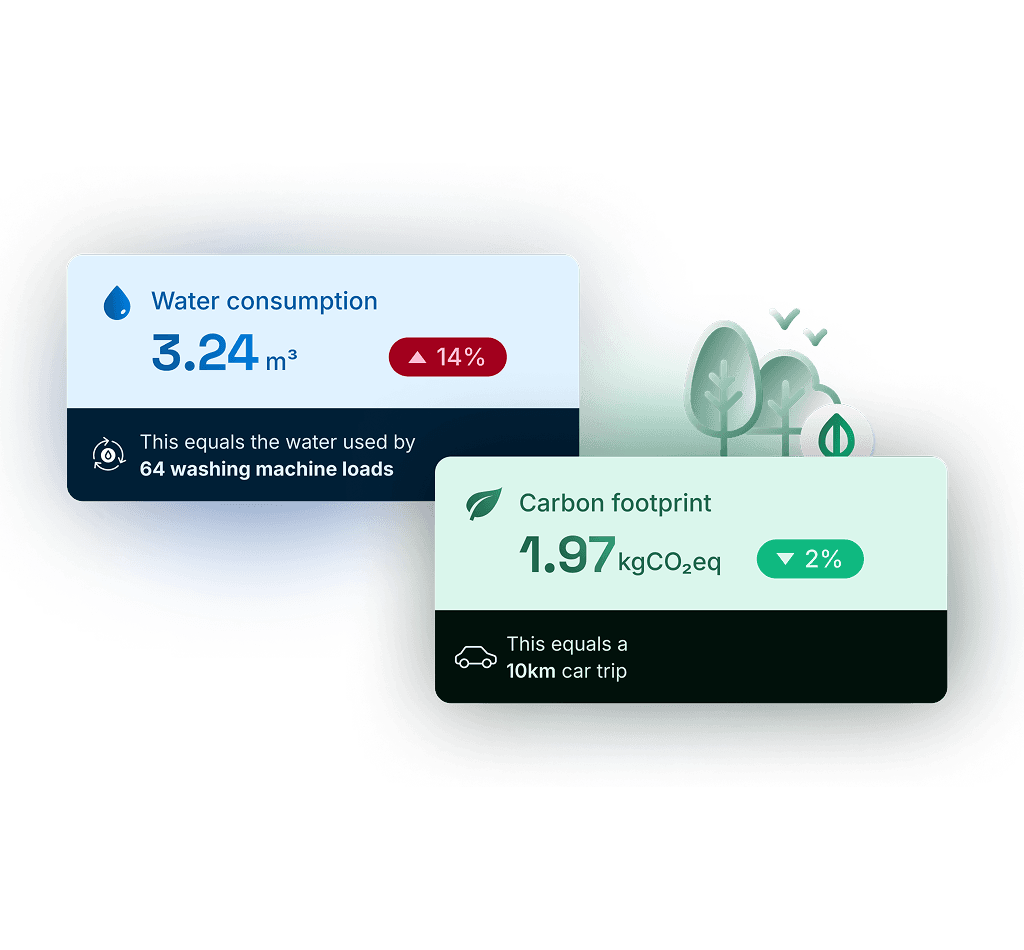
    Access detailed, lifecycle-based data on the carbon footprint and water consumption of your infrastructure. Metrics are updated daily, allowing you to track changes over time, assess the impact of your technical decisions, and support your sustainability reporting with reliable, actionable insights.

  • Clear, comparable data to guide your choices

    All products within the same family are evaluated using a consistent methodology, so you can compare them on equal footing. Use metrics like kgCO₂e/hr and a 0-to-3 leaf scale to assess their footprint. Not satisfied with the impact? Try a different reference, or switch regions to see how it changes. Sustainability starts with informed decisions.

  • Based on a methodology co-built with IJO & ADEME

    We partnered with IJO, a specialist in responsible digital practices, to develop the most thorough methodology possible. Our calculations are based on ADEME’s Product Category Rules (PCR), an industry standard that ensures reliable and consistent measurements. This approach covers the entire lifecycle impact, from server manufacturing to their use in our data centers.

Product Scope

The Environmental Footprint Calculator is designed to provide a comprehensive view of the environmental impact of your cloud usage. We are progressively integrating all products from our ecosystem into the unified tracking system of the calculator.

Get started with tutorials

Environmental impact resources

  • How is cloud usage's environmental impact measured today?

    How is cloud usage's environmental impact measured today?

    A reliable methodology is crucial for trustworthy data and informed infrastructure decisions, but no industry standard exists. Cloud providers lack a shared tool for comparing the environmental impact of AWS versus GCP. This article explains how we built our Environmental Footprint Calculator, detailing its methodology and how it empowers more eco-friendly choices.

  • CSRD compliance: ensure your compliance and optimize your Green IT strategy

    CSRD compliance: ensure your compliance and optimize your Green IT strategy

    The implementation of the CSRD in 2024 demands full transparency on your digital footprint. Discover how our Environmental Footprint Calculator directly addresses this imperative

  • Scaleway impact report

    Scaleway impact report

    Every year, Scaleway reports transparently on key ESG indicators, covering our commitments to our People, to the Environment and to Society at large. Discover our latest report revealing key indicators such as PUE+WUE (power and water usage effectiveness), CO2eq emissions (scopes 1, 2 & 3), hardware reuse, customer satisfaction ratings and staff diversity.

Discover your environmental impact

Frequently asked questions

Will environmental impact data be provided for all Scaleway products?

SouthShortIcon

Yes, we will proceed product by product so that, in time, you will have access to environmental impact information for each of the products you use.

What are the limits of the calculator?

SouthShortIcon

We miss a lot of supplier data.
It can sometimes be challenging to obtain all the necessary data from our suppliers, both for hardware manufacturing and data centers. In such cases, we use estimates with the support of Boavizta and ADEME's database.

Why do you talk about a holistic approach?

SouthShortIcon

The methodology we use is taking into account as many criteria as possible to get an image of the impact produced but also left in the ecosystem.
Thus the calculator takes into account:

  • Scope 3:
    The majority of emissions generated by Cloud consumption are in Scope 3!
    Based on GCP Impact report from 2023,
    Scope 1 emissions represent 1%of the total emissions
    Scope 2 emissions represent 24%of the total emissions
    Scope 3 = 75%of total emissions!
    Not measuring Scope 3 would completely miscalculate your carbon footprint.

  • LCA:
    Life Cycle Assessment (LCA) quantifies the emissions produced at each phase of the product or service’s life cycle, from its design to its end of life and its impact on natural resources, ecosystems, etc.
    Following a LCA Methodology, like the The Datacenter and Cloud PCR does, is moving from a subjective calculation based on a company operations’ and value chain’s emission to a holistic approach quantifying impact of the life cycle of a product and a service on the environment around it.

  • Water:
    Frequently ignored in cloud reporting, water is a major element of IT's impact on the planet. All the more so, generative AI/LLMs consume considerable amounts of water (cf. ChatGPT convo = 0.5 liters), and AI adoption is growing very fast.
    When assessing cloud providers, Power Usage Effectiveness (PUE) is often highlighted. A PUE close to 1 indicates better energy efficiency. However, a strong PUE can sometimes mask a less efficient Water Usage Effectiveness (WUE). For a realistic view of a data center’s environmental footprint, it’s essential to consider both metrics and that is why we provide transparent insights on consumption based on the Water Usage Efficiency (WUE) of our data centers.